
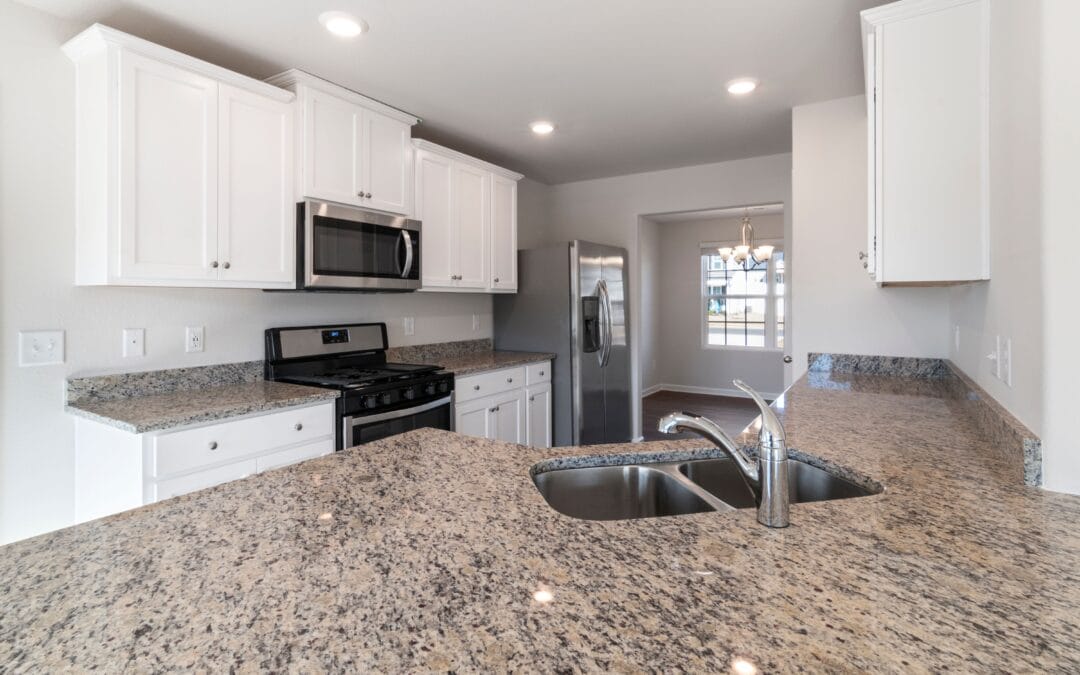
Granite countertops are valued for their durability, natural appearance, and ability to handle everyday kitchen activity. However, granite is a natural stone with varying levels of porosity. Over time, its protective sealer may become less effective, allowing liquids to penetrate the surface more easily.
The good news is that you do not have to rely only on a calendar to determine whether your countertop needs attention. A simple water test can provide a useful indication of how well the stone is resisting absorption.
Start With a Clean, Dry Surface
Before testing your granite, clean a small section of the countertop using a product recommended for natural stone. Allow the area to dry completely.
Testing a damp or recently cleaned surface may make the result difficult to interpret. Choose a few different areas rather than testing only one location. Spaces around the sink, cooktop, and other frequently used sections may experience more exposure to moisture and spills.
Try the Water Drop Test
The water drop test is a straightforward way to check whether granite is absorbing moisture. Place a small pool or several drops of plain water on an inconspicuous section of the countertop. Leave the water undisturbed for approximately 10 to 15 minutes, then wipe it away.
Pay attention to what happened beneath the water:
- Water remains beaded on the surface: The stone is showing good resistance to absorption in that area.
- The granite becomes noticeably darker: Moisture has entered the stone, which may indicate that the existing sealer is wearing down.
- Water absorbs relatively quickly: The countertop may require resealing, particularly if similar results occur across multiple areas.
Testing several sections provides a more useful picture because granite can have different absorption characteristics from one part of a slab to another.
What About an Oil Test?
Water is useful for checking general moisture absorption, but kitchens also encounter oils, sauces, and other substances that may stain natural stone. A small amount of cooking oil can be placed in an inconspicuous area for a short period, following appropriate stone-care guidance. After wiping it away, look for a darker mark that remains on the surface.
If the stone appears to absorb the oil, additional sealing may be worth considering. When testing any product, use a discreet location first and follow the manufacturer’s recommendations.
Look for Other Warning Signs
A failed water test is not the only reason to investigate resealing. New staining, particularly around high-use areas, may indicate that the stone is absorbing liquids more readily. However, not every mark means the sealer has failed. Dull patches or changes caused by acidic substances may involve etching rather than absorption. These are different issues and may require a different approach.
It is also important to avoid assuming that every granite countertop needs resealing at the same fixed interval. Stone porosity, usage, previous sealing, and the type of granite all influence maintenance requirements.
Granite vs. Quartz Maintenance
Homeowners comparing granite countertops in Kitchener with quartz countertops in Kitchener should understand that the two materials have different maintenance characteristics. Granite is a natural stone and may require periodic sealing. Quartz countertops are engineered and generally non-porous, so routine sealing is not normally required.
The choice between the two can therefore involve more than appearance. Maintenance preferences, usage, design, and budget can all be considered when selecting a countertop material.
When Should You Reseal?
If water consistently absorbs into your granite and creates a darker area, resealing may be appropriate. Before applying a product, check the manufacturer’s instructions and confirm that the sealer is suitable for your particular stone.
If you are uncertain about the condition of the countertop, professional advice may help prevent unnecessary sealing or improper product application.
Explore Countertop Options With Art’s Countertops!
Art’s Countertops provides granite, quartz, and other countertop options for homes in Kitchener, Waterloo, and Cambridge. Whether you are maintaining an existing surface or considering a new countertop, Art’s Countertops offers guidance on materials, styles, and installation options to help you make an informed choice for your space.